News

Recognising the danger signs: Lackiana’s commitment to maternal health in rural Zambia
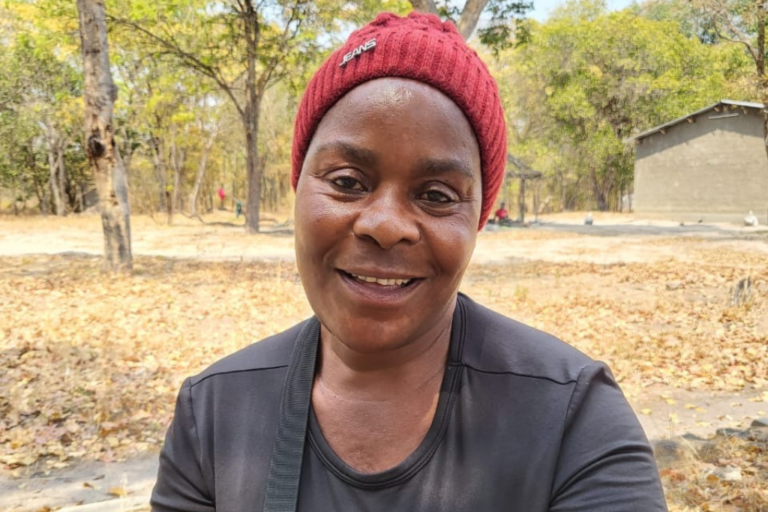
For more than a decade, Lackiana Katonga has dedicated her time to supporting the health and wellbeing of families in her community in rural Zambia. As a Community Health Volunteer (CHV), she plays an important role in helping women in her community recognise maternal health risks and access essential healthcare when they need it most.
Between 2014 and 2018, Lackiana received training in recognising the danger signs of a maternal health emergency and severe malaria through Transaid and partners’ Mobilising Access to Maternal Health Services in Zambia (MAMaZ) programmes.
Putting knowledge into practice
Just one week after completing her Safe Motherhood Action Group (SMAG) training, Lackiana was able to put her new knowledge into practice during a maternal health emergency.
One day, at around 11:00 p.m., the mother of 22-year-old Mirriam Chileshe, who was expecting her first child, arrived at Lackiana’s home seeking help for her daughter, who was in labour. Knowing that Lackiana had recently received training as a SMAG, she had turned to her for guidance.
When Lackiana reached Mirriam, she immediately recognised that something was seriously wrong. Mirriam was experiencing bleeding and a high fever, both of which were danger signs that required urgent medical attention.
Drawing on her training, Lackiana recognised the need to act quickly and helped arrange emergency transport to the nearest health facility.
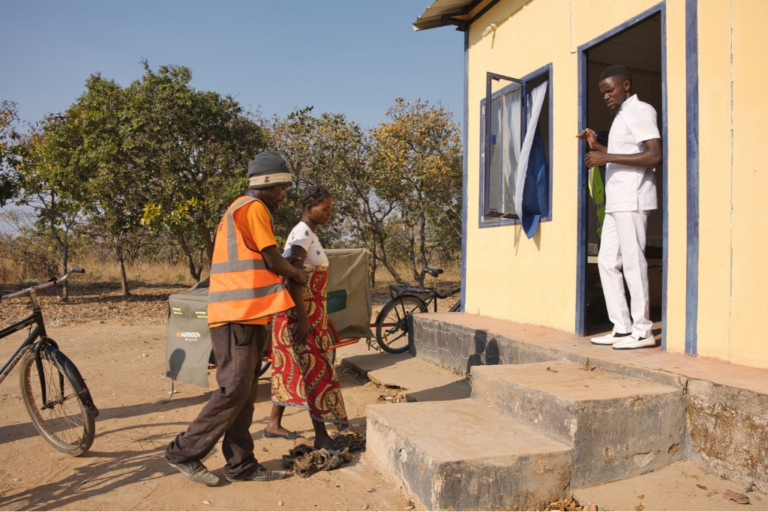
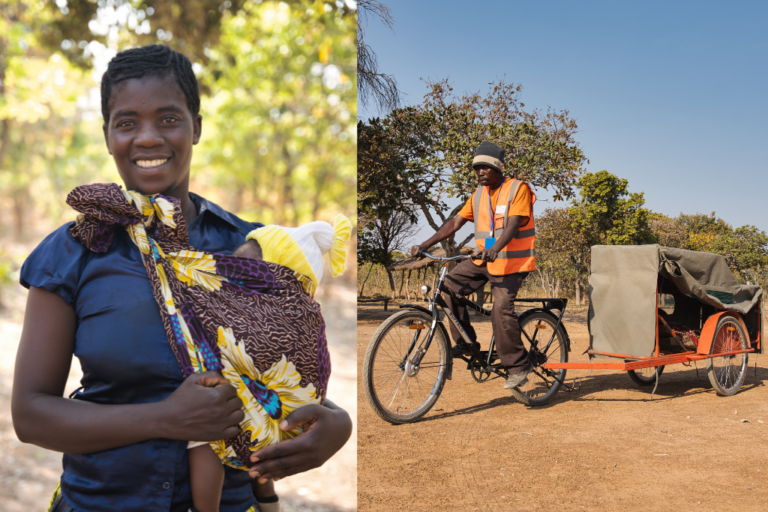
The community’s bicycle ambulance rider was contacted and responded promptly. Mirriam was carefully placed in the bicycle ambulance and transported to Chipundu Rural Health Centre, while Lackiana and Mirriam’s mother followed on a separate bicycle.
The journey was approximately 20 kilometres and took more than two hours. Despite the distance and the challenges of travelling at night, they reached the health facility, where a trained midwife was available to provide the care Mirriam needed.
Within approximately an hour of arriving, Mirriam safely gave birth to a baby girl.
“For me, this experience showed the importance of recognising maternal health danger signs and acting quickly. Having the bicycle ambulance available meant that we were able to get Mirriam to the health facility when she needed help,” Lackiana explains.
In recognition of the support they had received, Mirriam and her husband named their daughter Ruth, after the MAMaZ District Programme Officer who conducts much of the volunteer training. Mirriam and her daughter were discharged from the health facility the following day.
A decade of dedication
Today, Ruth is 10 years old and attending school. For Lackiana, watching her grow up is a powerful reminder of the importance of community knowledge, timely action and access to appropriate healthcare.
More than ten years after becoming a Community Health Volunteer, Lackiana remains committed to supporting mothers and families in her community, using the skills and experience she has gained to help others recognise health risks and seek care.
“I am grateful for the knowledge MAMaZ gave me. I have pledged to continue using what I learned to help mothers and families in my community and to contribute towards saving lives for as long as I am able.”
Strengthening access to maternal healthcare in rural Zambia
Transaid and partners’ MAMaZ programmes (Mobilising Access to Maternal Health Services in Zambia) were developed to address barriers preventing women in rural communities from accessing essential maternal healthcare, particularly during emergencies.
Working alongside local partners, health authorities and communities, the programme strengthens community-based systems for recognising maternal health risks, encouraging timely care-seeking and supporting emergency referrals.
A key part of this approach involves training Community Health Volunteers like Lackiana to identify maternal health danger signs and help families make informed decisions about seeking professional medical attention.
The programme also supports community-managed Emergency Transport Systems (ETS), including bicycle ambulances, to help people living far from health facilities access healthcare when conventional transport is unavailable or unaffordable.
Read Lackiana’s story as a PDF.
Recent Posts



Programme Partners





Corporate Partners