International Women’s Day 2026: Rights. Justice. Action. For ALL Women and Girls.
2nd March 2026
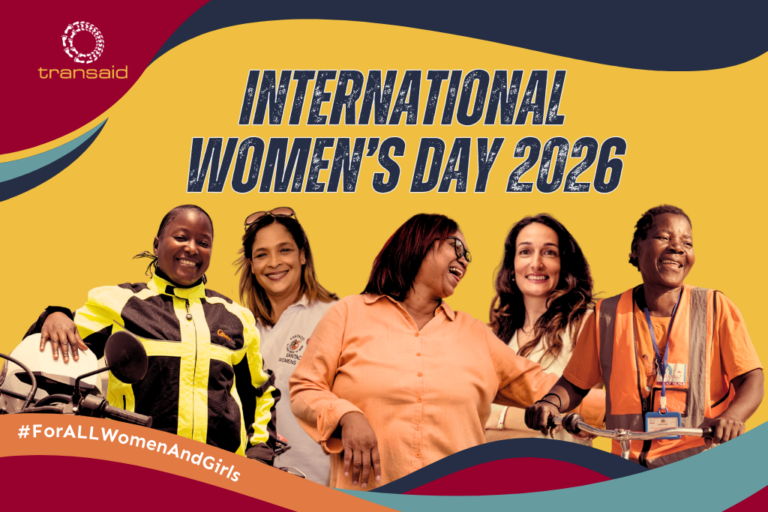
This International Women’s Day, the theme “Rights. Justice. Action. For ALL Women and Girls.” calls for meaningful steps to dismantle the cultural and structural barriers that continue to limit equality, from discriminatory norms to unsafe working conditions and restricted access to essential services.
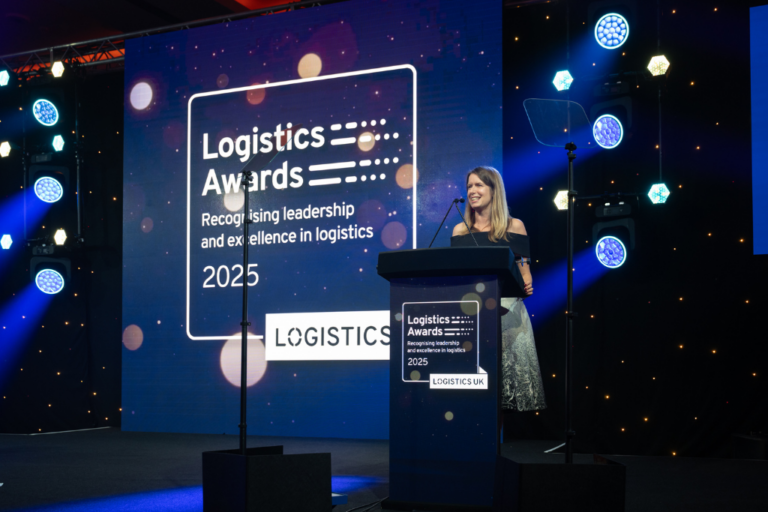
Women remain significantly underrepresented across the transport sector in Africa and globally. As Transaid Chief Executive Caroline Barber reflects:
“Women are still underrepresented in our sector and that needs to change. It’s such a rewarding and dynamic career path with so many different pathways.”
Transaid is committed to taking practical action to ensure women have equitable access to skilled employment, safe transport, and life-saving healthcare. When women’s rights are upheld within transport systems, communities become safer, more resilient, and more inclusive.
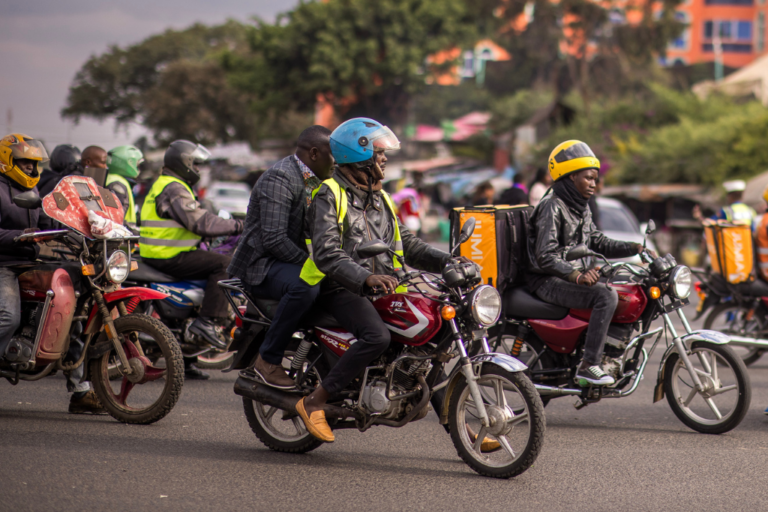
A motorcycle training opportunity can become economic independence and the confidence to challenge stereotypes on the road.
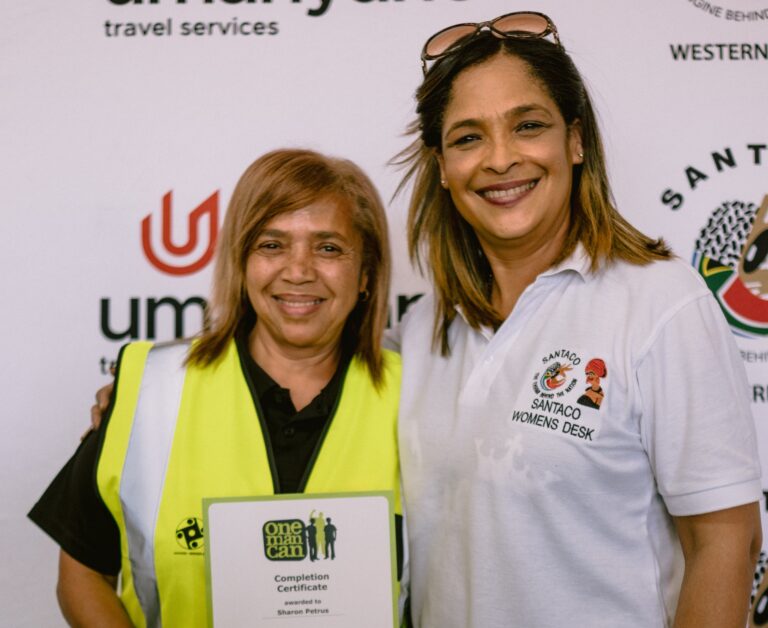
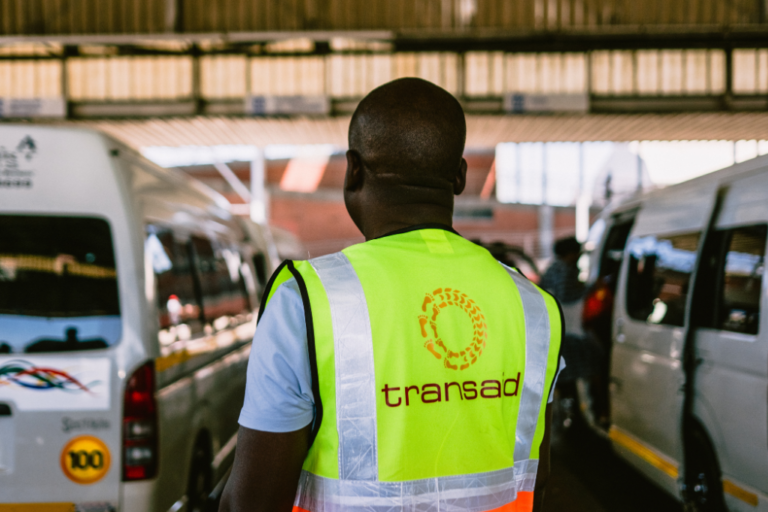
Training on harassment and sexual and gender-based violence (S+GBV) for women and men helps create safer, more accountable minibus taxi services in South Africa.
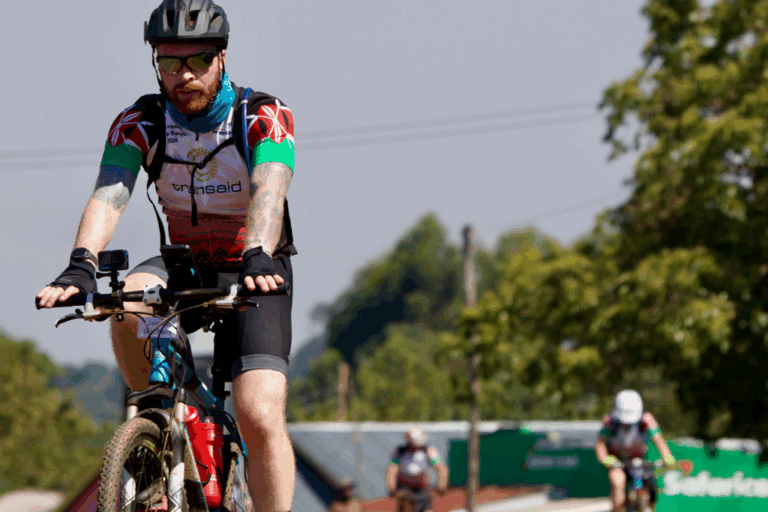
A bicycle ambulance rider protects the right to timely maternal healthcare in rural Zambia.
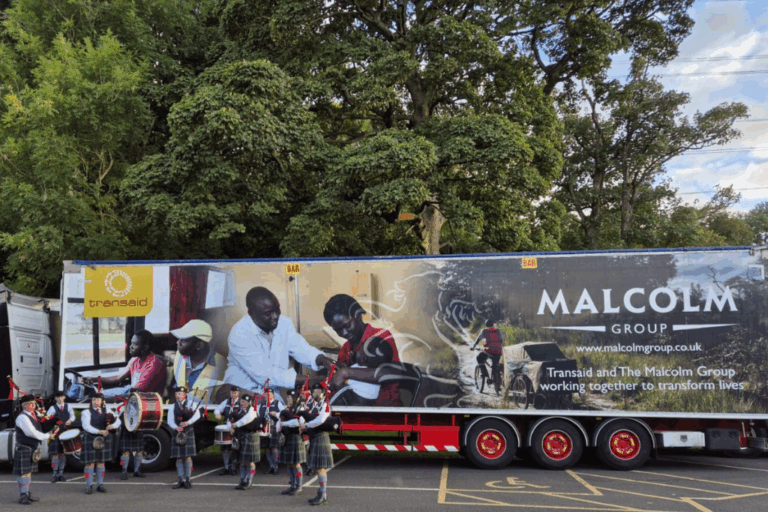
A corporate partnership strengthens these programmes to improve road safety and access to healthcare for all across sub-Saharan Africa.
The following stories demonstrate that advancing gender equality is not only a matter of justice; it is essential to building safer transport systems, stronger health outcomes, decent work, and inclusive economic growth for all.
Melody Kalimina
Melody Kalimina: ‘I know what I’m doing.’
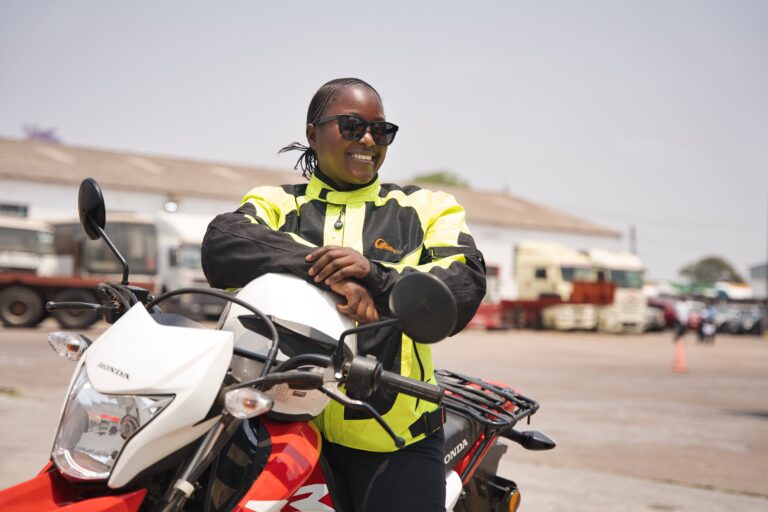
Melody Kalimina is a Production Research Field Technician for Bayer in Zambia. She first completed motorcycle training at the Industrial Training Centre, Transaid’s driver training partner in Zambia, in 2020. We met Melody again in September 2025 when she returned for refresher training.
Melody highlights the employment opportunities offered by practical driver training: “Rather than just having a professional qualification, you’ll also have a skill.”
Melody also believes that learning how to drive and ride defensively is especially important for women, who often face discrimination on the road. “It’s very hard because most of the time, men on the road tend to take advantage of you. They’ll be shouting, ‘As a lady, you’re riding, why? Don’t you have other things to do?’ But I’m like, ‘no, I know what I’m doing’.
“In Zambia generally, there are few female riders. I was given an opportunity to work for Bayer because they needed a female rider. So for me, it’s an advantage.”
She has a clear message for other women:
“I would like to encourage my fellow ladies out there that no matter who you are, you need to choose a skill for yourself. You can ride, you can do forklifting, you can do truck driving, you can do a lot of things.”
Sherly Cleophas: ‘You don’t need to be shut out by the world.’
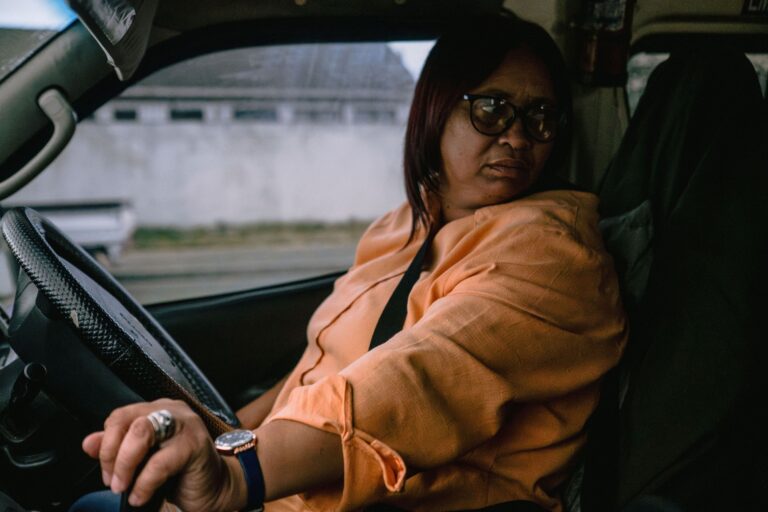
Sherly is a minibus taxi driver and owner in Cape Town, South Africa. She is responsible for customer complaints and regulates the Belville Taxi Rank. Sherly is also an ambassador for the South African National Taxi Council (SANTACO) Women’s Desk in the Northern Region, working closely with Transaid to tackle harassment and sexual and gender-based violence (S+GBV) in minibus taxis.
When Sherly first started working in the minibus taxi industry, confidence did not come easily. “In the beginning, I didn’t feel that confident,” she recalls. “I didn’t know the drivers. I didn’t know the route. You will always feel that some of the guys got that attitude, ‘why should I listen to a woman? I’m a man’.”
Women taxi drivers and passengers alike face challenges in minibuses. As a Women’s Desk ambassador, Sherly handles complaints, many of them from women experiencing harassment or unsafe behaviour in taxis.
Sherly has completed five GBV-focused courses during the Safer Minibus Taxis project. These trainings have strengthened her ability to support complainants, conduct disciplinary processes properly, and raise awareness among drivers and rank operators.
Sherly also emphasises that meaningful change requires male allies: “We need more male drivers to support us as women. They must not feel that they’re above us or we’re above them. We’re in the same industry and we’re supposed to support each other.”
To this end, Transaid’s Safer Minibus Taxis project appoints male champions in the industry to educate their male colleagues on harassment and sexual and gender-based violence.
Sherly’s message to women is direct and unapologetic:
“I want to encourage women to be more powerful. You don’t need to be shut out by the world. Tell them who you really are, what you want, and what you want to become.”
Yolande Jacobs: Giving opportunity, gaining a safer, more inclusive taxi industry
Yolande Jacobs is a taxi operator and Chairperson for the South African National Taxi Council (SANTACO) Women in Mitchell’s Plain Taxi Association.
Yolande was first introduced to the minibus taxi industry by her husband, who worked as a taxi operator. Her local Taxi Association, Mitchell’s Plain, then approached Yolande with the offer of a receptionist role. From there, Yolande steadily built up her experience, progressing into administration then supporting the provincial SANTACO office in the Western Cape, where she worked for fourteen years.
Yolande reflects, “This is a male-dominated industry. Most of the men don’t really see women in high level positions, especially at provincial level.
“The challengeis, they don’t see a woman running the province,” she explains. “They must just give us the chance and let us show them what we can actually do.”
She speaks openly about how the industry has transformed her personally: “I’m always proud of my work. I’ve been here for a very long time and I built myself up. I was a very shy person when I came to this industry, but you became tough in this industry.”
That personal transformation now feeds directly into her work with Transaid’s Safer Minibus Taxis project. Through training, awareness, and mentorship, the project equips women and men in the taxi industry with the skills, confidence, and knowledge to challenge unsafe behaviour, support one another, and promote respectful, professional conduct across taxi ranks and routes. It also works to shift attitudes within the wider industry, recognising that safer transport systems benefit everyone.
“Since Transaid came on board, I can tell you I have seen changes in these ladies,” Yolande says. “I can see their hunger for training, their hunger for what they get to learn, their hunger for experience. The future looks bright with Transaid next to us.”
Charity Chalwe: bridging the gap between the community and health facility
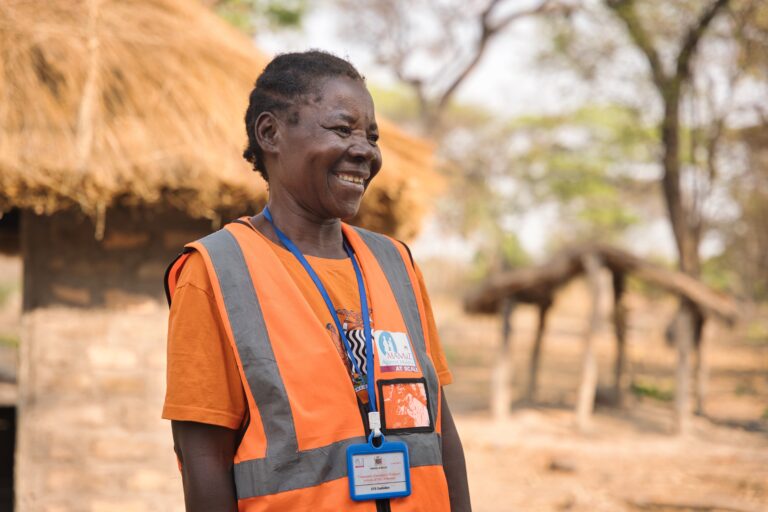
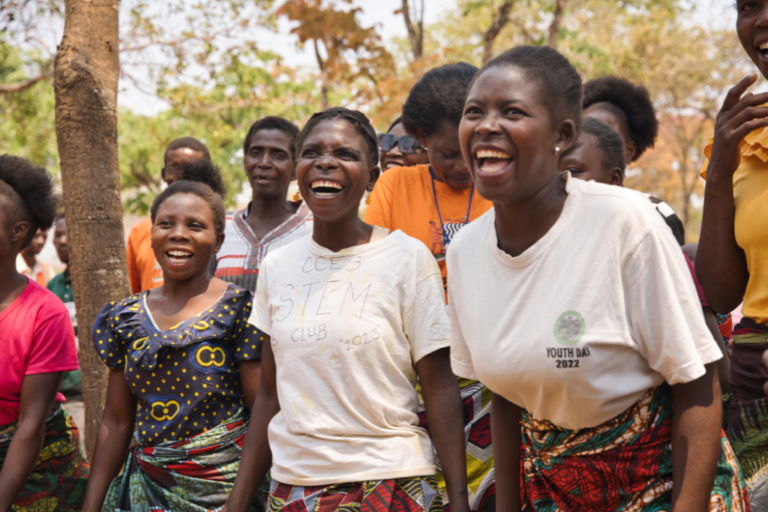
Charity Chalwe is a volunteer bicycle ambulance rider and custodian with Transaid’s Mobilising Access to Maternal Health (MAMaZ) and MAMaZ Against Malaria projects, serving her community in rural Zambia. In areas where formal ambulance services are limited or non-existent, Transaid implements bicycle ambulances as a form of Emergency Transport System (ETS). Riders like Charity provide a vital link between communities and life-saving healthcare, particularly for pregnant women and children with suspected severe malaria.
Charity volunteered for the role in 2021, after a community meeting called by the local headman raised serious concerns about maternal deaths.
For Charity, volunteering as an ETS rider is about more than emergency transport; it’s about investing in the future of her community.
“What motivates me is helping my fellow women, and children with malaria,” she shares. “I’m very hopeful that the children I’m helping today, will one day become doctors and nurses and they’ll be able to help this community.”
Like many women working on the frontlines of community health, Charity faces significant challenges. The most pressing is the limited equipment– there is only one bicycle ambulance currently situated in Charity’s community and sometimes more than one community member needs emergency transport at the same time.
“I already offered myself to be a volunteer,” she says simply. “All I ask for are the tools that will help me do my job effectively.”
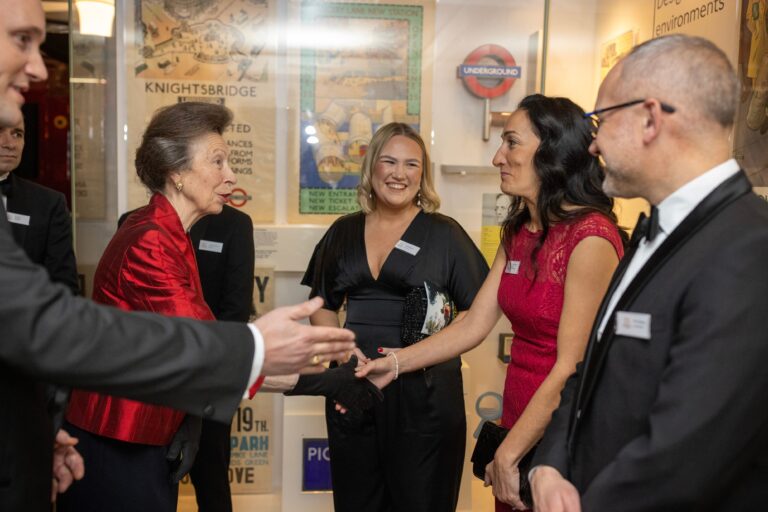
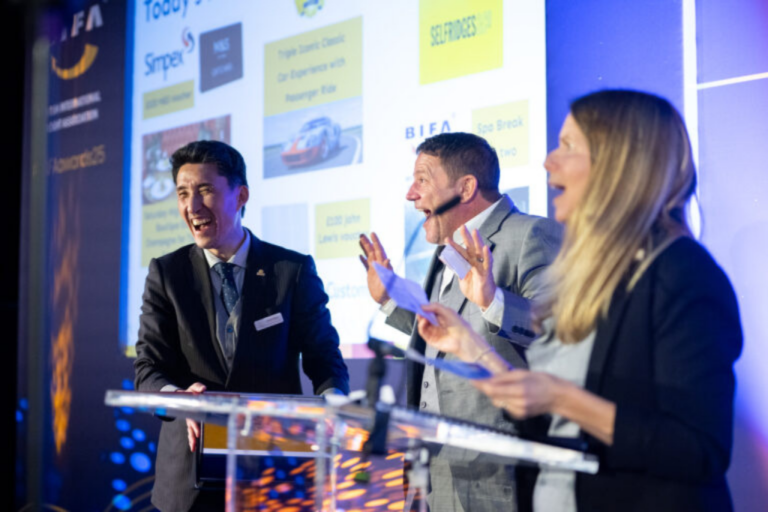
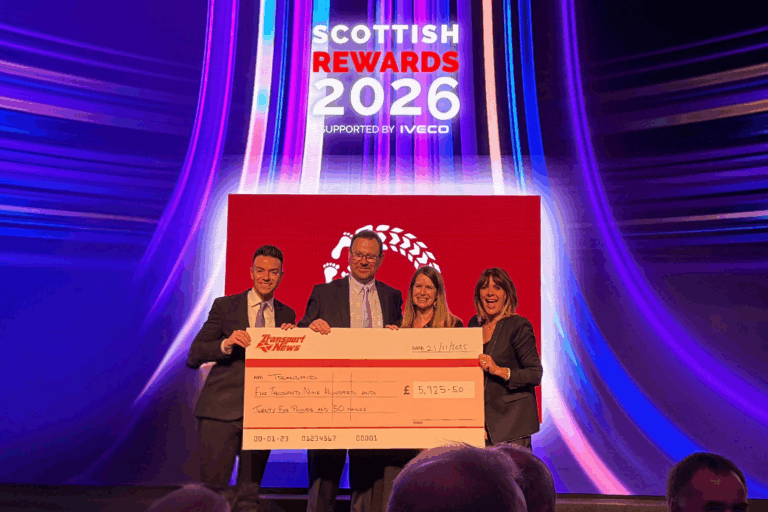
Maria Torrent-March meeting Transaid Patron HRH The Princess Royal
Maria Torrent-March: “Visibility changes expectations.”
For Maria Torrent March, Vice President of Warehousing & Logistics – Europe at Iron Mountain, International Women’s Day is both reflective and forward-looking.
Having entered the logistics industry nearly two decades ago at a time when it was far more male-dominated and supply chain was not yet a defined academic pathway, Maria has witnessed significant transformation.
“Over the years, I’ve seen how much the industry has evolved. That progress doesn’t happen by chance. It happens because women empower and lift each other, and because women and male allies actively encourage, support, mentor and sponsor women into leadership roles.
“When I joined the industry, there were very few women in senior leadership roles. That lack of representation quietly shapes what people believe is possible. Today, seeing women leading strategy, operations, sales, planning, automation, technology and transport sends a
powerful message: there is no single profile of what a logistics leader looks like.”
Iron Mountain has been a Transaid Corporate Partner since 2023, directly supporting our road safety and access to healthcare programmes. “What is inspirational is how Transaid turns transport and logistics into a powerful tool for women’s empowerment and systemic change,” Maria says.
“When we widen access to opportunity, we build more sustainable supply
chains and more sustainable societies.”
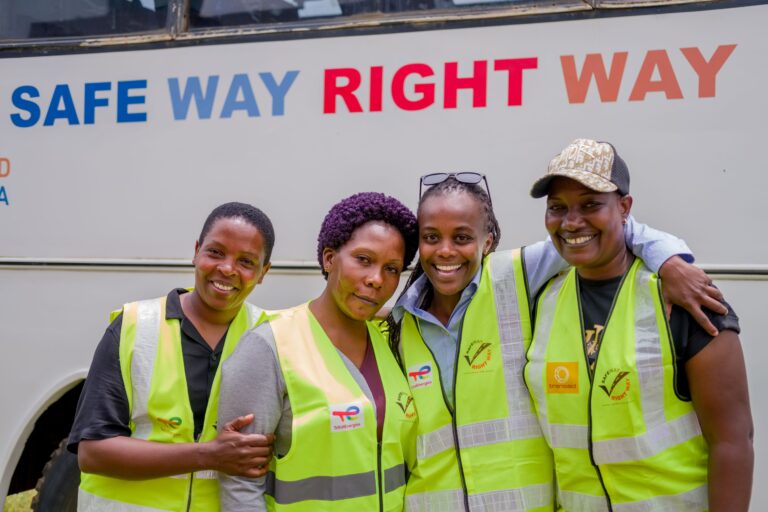
Safe Way Right Way trainees L-R: Kate Magara Alderman, Enid Banura, Sharon Kinyatta, Jackline Latigi
Women in the Road Transport Sector in Africa
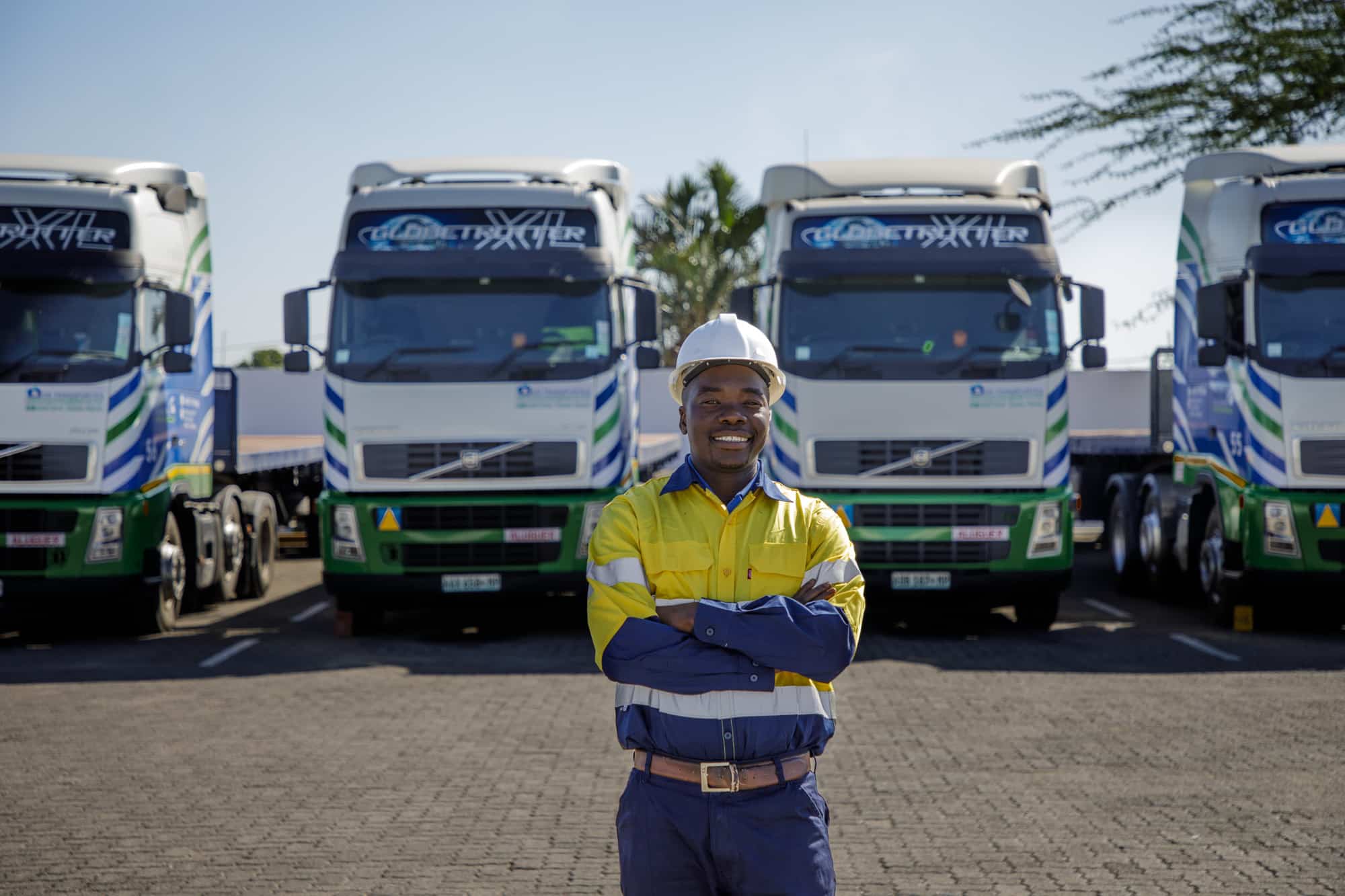
Women remain significantly under-represented in Africa’s road transport sector, facing entrenched gender stereotypes, harassment, limited access to finance and training, and unsafe working conditions. However, changes are underway. From ride-hailing platforms and women-only services to targeted training initiatives and strengthened reporting mechanisms, new pathways for women’s inclusion are opening across both informal and formal transport systems.
As explored in our accompanying thought piece on women in Africa’s road transport sector, written by Gina Porter and Sam Clark, meaningful progress requires more than increasing participation alone. Structural inequalities, workplace cultures, safety concerns, and access to capital must be addressed together if women are not only to enter the sector — but to thrive within it.